
How local leadership can drive economic transformation
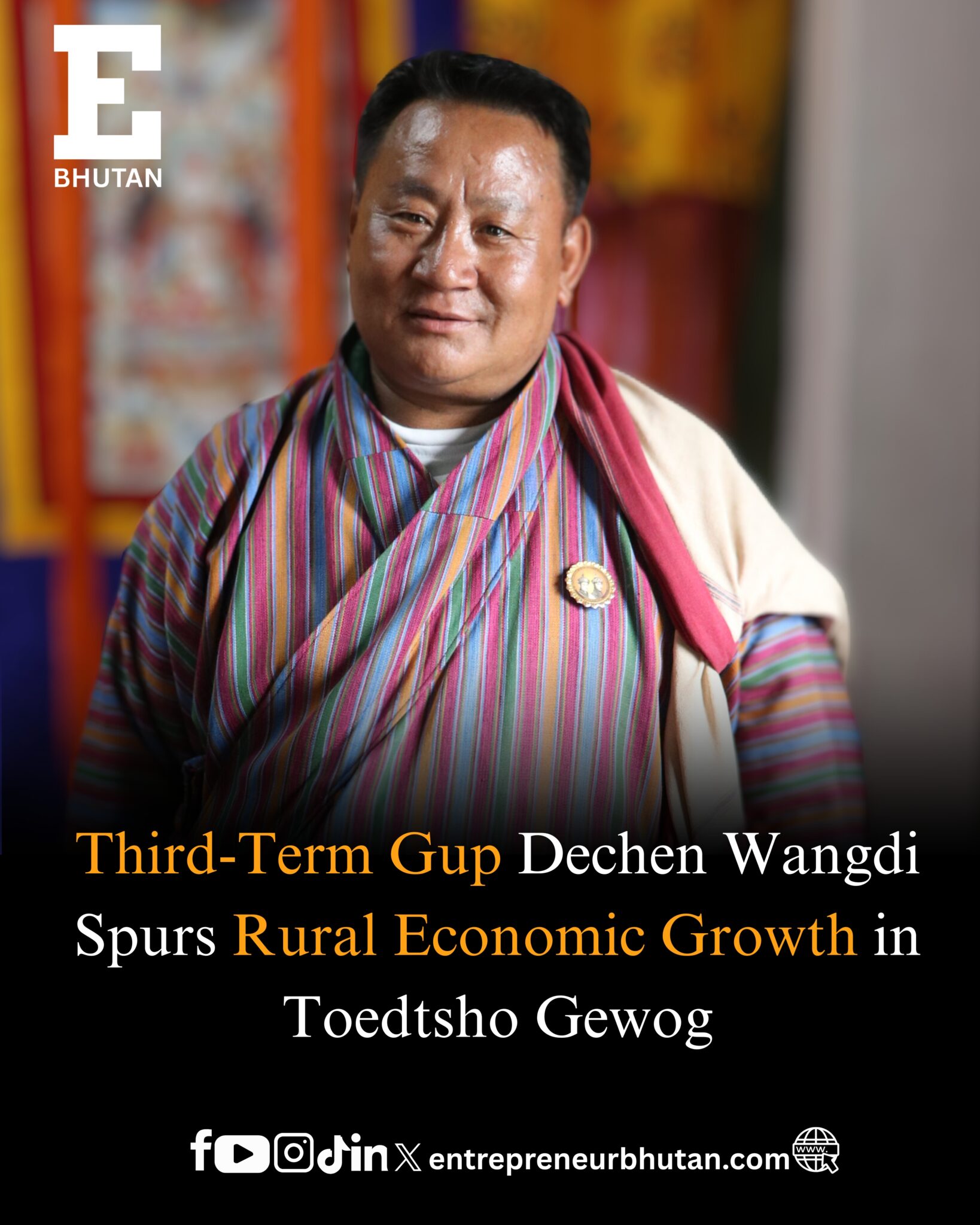
Gup Dechen Wangdi of Toedtsho Gewog, Trashiyangtse, is now serving his third term after over 14 years in office. His tenure has been marked by strategic grassroots development that has improved rural livelihoods, enhanced agricultural productivity, and strengthened market integration for local producers.
Gup Dechen, originally from Jangphutse village, brings to the role a practical and varied background. After completing Class 3 in 1998 from Jangphutse School, he worked in multiple sectors—first as a Goemchen (lay monk), then in the armed forces, later as a security personnel with the Bhutan National Bank, and even as a taxi driver. This hands-on experience across diverse sectors has helped him understand the challenges faced by everyday Bhutanese.
Infrastructure and Agriculture at the Core of Development
Since his first election, Dechen Wangdi has made economic development a priority for Toedtsho Gewog. One of his key initiatives was achieving 100% household sanitation, laying the foundation for improved health and workforce productivity.
However, his most impactful economic contribution lies in the development of rural farm roads—vital for reducing logistical bottlenecks and improving access to markets. “Road connectivity has not only improved mobility for our farmers but also opened up the gewog to trade opportunities with neighboring dzongkhags,” said Gup.
In a strategic move to mechanize agriculture and reduce labor-intensive practices, Gup Dechen distributed 48 power tillers, one for each chiwog. This initiative significantly boosted farming efficiency and output, particularly in rice, maize, and potato cultivation.
Market Linkages for Rural Producers
Recognizing the potential of commercial farming, Dechen Wangdi facilitated market linkages for cash crops, allowing local farmers to sell their produce to markets in other dzongkhags. This has created new revenue streams and encouraged more farmers to adopt market-oriented agriculture.
“This is not just a welfare-driven model—it’s an economic model for rural resilience,” said an official from the Dzongkhag Agriculture Sector. “Linking producers to markets is key to addressing rural poverty and youth migration.”
The Bigger Picture: A Gewog with Business Potential
Toedtsho Gewog, named after the sacred Toedtsho Lake, is home to both rich natural resources and a skilled rural workforce. The gewog lies within the Bumdeling Wildlife Sanctuary and is known for its biodiversity, cultural heritage, and agricultural potential.
In addition to agriculture, the gewog supports handicrafts such as weaving, bamboo products, and woodwork—sectors with growth potential if linked to larger markets or tourism channels. Gup Dechen’s infrastructure efforts have created a foundation for these micro-industries to thrive.
Economic Growth
Toward economic self-reliance and inclusive growth, Toedtsho Gewog offers a successful example of how effective local governance, coupled with a business-oriented mindset, can transform rural economies.
Gup Dechen Wangdi’s third-term victory is not just political—it reflects the trust of a community that has seen real, measurable progress. His approach demonstrates that local governments can play a critical role in driving rural entrepreneurship, improving productivity, and stimulating regional trade.


